
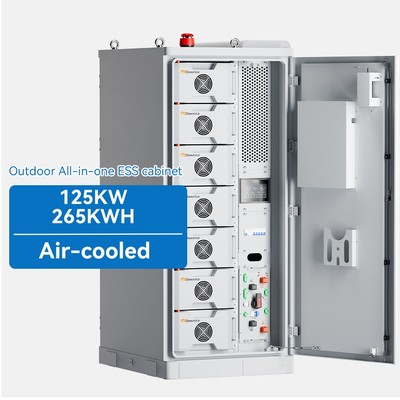
A 5 percent state-of-charge difference on a 314 Ah cell is 15.7 amp-hours. Whether those amp-hours are burned in a resistor or moved into a neighbouring cell is the whole of the difference between passive and active balancing, and the fuel for the comparison is 13.3 kilowatt-hours of heat against about 2.0.
Scope: what changes and what does not
Balancing does not create capacity. It decides where the energy that closes a spread goes, and how quickly the spread closes. Those two questions are the comparison.
Both architectures read the same quantity, cell voltage, and act on the same string. This article stays on the difference between them. Why a spread forms in the first place, and the threshold at which the BMS raises an alarm, are separate questions and are not re-derived here.
Where the corrected charge goes
A passive circuit places a resistor across the highest cell and dissipates charge until that cell matches its neighbour. The energy leaves the string as heat. An active circuit moves the same charge into a lower cell through a small converter, so most of it stays in the string.
Size it. A 5 percent state-of-charge difference on a 314 Ah cell is 15.7 Ah, and at the 3.2 V nominal cell voltage that is 50.2 Wh per cell. On the 264-cell string of the 265 kWh cabinet, that is 13.3 kWh, or 5.0 percent of the cabinet's published rated energy.
The passive path turns all 13.3 kWh into heat. An active path at a stated 85 percent transfer efficiency turns 15 percent of it into heat, which is 2.0 kWh. The difference is 6.7 times, and it is the first number a buyer should hold.
| Question | Passive balancing | Active balancing |
|---|---|---|
| Where the corrected charge goes | Dissipated as heat in a resistor | Moved into another cell |
| Heat from a 15.7 Ah correction | 13.3 kWh | about 2.0 kWh |
| Time for the same correction | 157 hours at 100 mA | 15.7 hours at 1 A |
Conditions: 314 Ah cell, 3.2 V nominal, 264 cells in series; 85 percent transfer efficiency assumed for the active path; balancing currents are stated conditions, not published figures. Units: kWh and hours. Source: derived from the published cell type and string length; no published balancing current is available for these products.
The same correction, timed
Time is charge divided by current. The same 15.7 Ah takes 157 hours through a 100 mA passive resistor and 15.7 hours through a 1 A active converter.
Normalize that against a charging window, because that is the only time a passive circuit normally gets. On a daily four-hour off-peak window, the passive path needs 39 windows and the active path 4. Both architectures can correct 15.7 Ah in principle, and under a daily window the passive path needs 39 charging windows to do it. If the spread's source regenerates within that period, the correction never converges and the heat is paid again.
That is the reversal worth holding on to. The efficiency argument favours the active circuit by 6.7 times; the time argument turns a 4-window job into a 39-window job, and the second one decides whether the first one ever finishes.
The two currents are conditions of this calculation, not published specification values. The ranking between the architectures survives different currents; the hours do not.
The correction, priced in heat inside the enclosure
The 13.3 kWh does not leave the site. It is rejected inside the cabinet, whose published operating window runs to 55 degrees C with derating above 45 degrees C. The container's published window is narrower, 0 to +45 degrees C.
Spread over 157 hours, the passive path averages about 85 W. Against a published AC rating of 125 kW that is a rounding error, so a single correction is not a thermal event. The case that matters is the recurring one. If the spread is regenerated each cycle, the same 13.3 kWh is paid every cycle: at 330 cycles a year the passive path rejects 4.4 MWh a year against 0.66 MWh for the active path, a difference of 3.7 MWh a year landing inside an enclosure with a published derating threshold above 45 degrees C. That condition, and not the one-off correction, is what makes the heat argument worth quantifying.
When each architecture is the right one
| If this is true of the site | The architecture to specify |
|---|---|
| The spread stays inside the normal band and closes each charge | Passive |
| The spread regenerates every cycle from a thermal or self-discharge difference | Active |
| The charging window is short and the spread is large | Active |
| The enclosure already approaches its published derating temperature | Active |
Two criteria decide most projects. If the spread is regenerated slowly and the charge window is long, a passive circuit closes it inside normal operation and the extra heat stays a rounding error. If the spread is regenerated every cycle, the passive path pays 13.3 kWh of heat every cycle and the active path pays about 2.0, and the enclosure absorbs the difference for the life of the pack.
The limits of this comparison
The two currents used above are stated conditions. No published balancing current is available for these products, so the ranking between the architectures holds while the hours and kilowatt-hours transfer only with the supplier's numbers attached.
Nothing in this comparison raises the usable energy ceiling. That ceiling is set by the weakest cell in the string, which is a capacity and sorting question rather than a balancing one, and no balancing current changes it.
Neither architecture moves charge faster than the circuit driving it. A larger spread is not corrected by a cleverer algorithm; it is corrected by more current for longer, or by not needing to.
And the published figures used here are the cell type, the string length and the two temperature windows. The balancing behaviour itself is not on the published pages.
What to ask for at the point of specification
Ask for the balancing current in amperes per cell, and the windows in which balancing is permitted: charge only, rest, or also discharge. An answer of the form that the BMS balances the cells, with no current and no window, has not described a circuit.
Ask where the balancing heat is rejected and what temperature it adds to. A reply that the cooling will handle it, without a rating, has moved the question rather than answered it.
Ask for the spread at which balancing starts and the spread at which the alarm trips, as two separate numbers. A supplier who quotes only the alarm threshold has given you the symptom, not the control.
Four things become fixed once the pack is built. The balancing architecture is fixed when the BMS board and the pack harness are fixed, and changing it means replacing both. The balancing current is fixed by the resistor or converter values on that board, and no firmware update raises it. The permitted balancing windows are fixed when the BMS logic is signed off. And where the balancing heat is rejected is fixed when the enclosure's thermal design is signed, which is why the temperature question belongs in the specification rather than in commissioning.
The published cell data used above comes from the manufacturer's pages for the units Ruibit distributes; balancing currents are not among the published values, which is why they appear here as stated conditions.
The comparison is decided by three numbers: the balancing current, the window it is allowed to run in, and where its heat goes. None of them is on the published page, and all three are fixed at the point of specification.
FAQs
1. Does active balancing increase usable capacity?
No. Balancing does not create capacity; it decides where the energy that closes a spread goes and how fast the spread closes. The usable ceiling stays set by the weakest cell in the string, which is a sorting and capacity question rather than a balancing one.
2. How much energy does passive balancing waste?
For a 5 percent correction on a 314 Ah cell in a 264-cell string, 13.3 kWh, which is 5.0 percent of the cabinet's published rated energy, and all of it leaves as heat. An active circuit at 85 percent transfer efficiency turns about 2.0 kWh into heat, so the difference is 6.7 times.
3. How long does a correction take?
15.7 Ah takes 157 hours through a 100 mA passive resistor and 15.7 hours through a 1 A active converter. On a daily four-hour charging window that is 39 windows against 4. Those two currents are stated conditions, not published figures.
4. Which architecture should a C&I project specify?
It depends on whether the spread regenerates. If it closes each charge and stays inside the normal band, passive works. If it regenerates every cycle from a thermal or self-discharge difference, the passive path pays 13.3 kWh of heat each cycle and active is the one to specify.
5. What should be requested at the specification stage?
The balancing current per cell, the windows in which balancing is permitted, the spread at which balancing starts, and where the balancing heat is rejected. Architecture, current, windows and heat path are all fixed once the BMS board and the enclosure design are signed.