
Home battery system cost divides into three layers, and most quotations collapse all three into one currency figure. Hardware is counted per usable kWh, installation per handling unit and per connection, and lifetime service per kWh delivered and per warranty clock still running. Two quotes can therefore sit twenty percent apart on price without either one being wrong.
The three cost layers and the assumptions behind them
Layer one is bought per unit but consumed per kWh, and the conversion is published capacity multiplied by the depth of discharge behind the cycle life. Layer two follows the number of units, the weight of each, and the number of connections. Not capacity. Three wall-mounted units of 10 kWh and one integrated unit of 20 kWh carry the same published capacity. Layer three is the labour a warranty clause excludes: service visits, spare modules, and replacement of any component whose warranty expires first.
Any number that cannot be traced to a published specification or to the reader's own quotation is an assumption, and assumptions belong in a table that travels with the comparison. The tables below carry the worked example.
| Input | Value used | Status |
|---|---|---|
| Import price | 0.30 USD per kWh | Assumption; replace with the tariff on the household bill |
| Round-trip efficiency | 95 percent low voltage, 96 to 97 percent high voltage | Published specification |
| Depth of discharge used for cycle life | 80 percent | Published specification, quoted at that depth |
| Published cycle count | 6,000 cycles | Published specification |
| Reserve held for outage backup | 15 percent of usable capacity | Assumption; set by the backup requirement |
| Hardware price | Not entered | Quotation specific and not published anywhere |
| Step in the calculation | Worked figure | Basis |
|---|---|---|
| Usable energy per 20 kWh published | 16.0 kWh | 20 kWh x 80 percent depth of discharge |
| Throughput across the published cycle count | 96,000 kWh | 16.0 kWh x 6,000 cycles |
| Drawn energy to deliver it at 95 percent | 101,053 kWh | 96,000 / 0.95 |
| Drawn energy at 97 percent | 98,969 kWh | 96,000 / 0.97 |
| Value of that difference at 0.30 USD per kWh | 625 USD | 2,084 kWh x 0.30 USD |
| Years to reach the cycle count at two cycles a day | 8.2 years | 6,000 / 730 |
Published inputs are quoted at the conditions stated in the product specification; assumed inputs are the author's.
Cabinet-level cycle life is the figure this calculation uses, because it is the number a buyer can hold a supplier to. Cell-level cycle life is quoted higher on some datasheets — up to 8,000 on this site's own specification — because it is measured on the cells before the losses and derating of the assembled system are applied. Ask which of the two a quotation is using; a warranty clause written against the cell figure is difficult to enforce.
The tariff moves this calculation more than any other input. A model built on a national average price produces a return figure no single household can reproduce, because the value of a stored kWh depends on the import and export spread in the hours the battery cycles. Ask the supplier which tariff their figure assumes, and at which hours.
What published specifications let you compare
Published specifications supply four attributes checkable before any price appears: capacity, unit count, weight per handling unit, and the depth of discharge behind the cycle life.
| Configuration | Published capacity and unit count | Published weight |
|---|---|---|
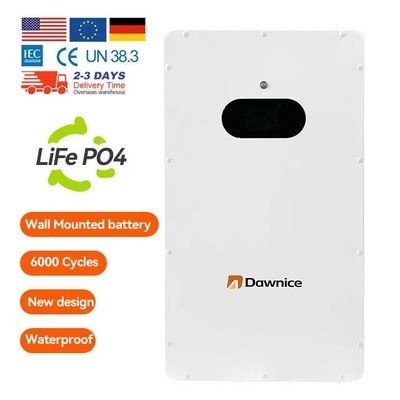
| Two wall-mounted 51.2 V units | 20 kWh in 2 units, 10 kWh each | About 95 kg per unit |
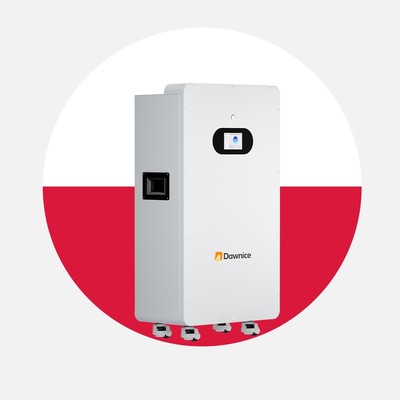
| Integrated 10 kW hybrid unit | 20 kWh in 1 unit | About 220 kg |
| Stackable base with integrated 10 kW inverter | 20 kWh in 1 unit, expandable to 80 kWh | About 180 kg base, about 95 kg per module |
| Nine high-voltage modules at 460.8 V | 46.08 kWh in 9 modules, 5.12 kWh each | About 300 kg total, about 33 kg per module |
| Three-phase all-in-one, liquid cooled | 32.14 kWh in 1 unit | About 320 kg |
Quoted from the published product specifications at the stated nominal voltages; verified as of 2026-09.
Read the weight column before the capacity column. Two units at about 95 kg each mean two handling operations and two anchor sets. The 20 kWh integrated unit is one delivery at about 220 kg, above the two-person manual handling limit. The 46.08 kWh stack reaches its capacity in nine modules averaging about 33 kg, so lifting is smaller and connections more numerous.
Specifications for those capacities are published as and ; the capacity input is covered in , the architecture choice in , and the rest of this cluster in the .
Installation cost follows the unit count, not the kWh
Two residential project records published for this range show the separation. The names 30 kWh from three wall-mounted 10 kWh units on a Sunsynk inverter, 2026-03; the names 75 kWh from five wall-mounted 15 kWh units on a Deye inverter, 2026-06.
Capacity grows by a factor of 2.5 and the unit count by 1.7, because capacity per unit rose from 10 kWh to 15 kWh. Site work follows the second factor, so a price per kWh installed spreads per-unit work across a capacity number that did not generate it. The case records Ruibit Energy files by market name the inverter and unit count of each build.
Ask the supplier whether the scope is priced per unit or per project, because a per-project figure hides the unit count. Ask what the handling plan is for the heaviest single item, and put the answer in writing before the order. Ask which items sit inside the scope: mounting hardware, cabling, the metering connection and commissioning records.
Two parts of an installation are irreversible: the mounting positions, and the point in the distribution board where the supply is connected. Once commissioned, moving it is a new project.
Lifetime service is a second warranty clock
Batteries and inverters do not age at the same rate. The integrated configurations publish two figures: ten years for the battery and five years for the inverter. The stackable base and the three-phase all-in-one publish ten years without naming which components that covers, and in both cases the inverter sits inside the same enclosure.
The published cycle count is the second clock. At one cycle a day, 6,000 cycles is 16.4 years and the warranty term binds first. At two cycles a day the same count is reached in 8.2 years. Ask for the warranty answer as a clause.
The handover record is where lifetime cost is set: which settings stay under installer control, what the household is allowed to change, and which documents travel with the goods.
Sensitivity: the four inputs that move the total
Equipment price is treated as the decisive input and moves this calculation least.
| Input | Change | Effect on the delivered-energy figure |
|---|---|---|
| Round-trip efficiency | 95 to 97 percent | 2,084 kWh more drawn for the same delivery; 625 USD at 0.30 USD per kWh |
| Cycles per day | 1 to 2 | The published cycle count is reached in 8.2 years instead of 16.4, inside a ten-year term |
| Reserve held for outages | 0 to 15 percent | Usable energy per 20 kWh installed falls from 16.0 kWh to 13.6 kWh |
| Import price | 0.30 to 0.15 USD per kWh | The value of a one-point efficiency gain falls from 316 USD to 158 USD |
Computed on 20 kWh of published capacity at 80 percent depth of discharge and 6,000 published cycles.
A one-point efficiency difference is worth 316 USD across the published life at the assumed price, and 158 USD at half that price. Read it as a range. Comparing quotations is a different exercise from comparing configurations; the sequenced version is in .
Where this calculation stops being valid
The divisor structure holds while the system cycles. Three conditions end it.
If the household does not cycle the battery on most days, the throughput denominator is never reached and the delivered cost per kWh rises with no price change. If the reserve held for outage backup is set above a third of usable capacity, the comparison belongs around backup hours instead. If the export side of the meter is uncompensated, the second half of every cycle loses its value.
No hardware price appears above, because a price is a quotation. The comparison leaves that input with the reader and stops being useful the moment it comes from a supplier's average rather than a signed offer.
FAQs
1. Why can two home battery quotes differ on price and still not be comparable?
Because each one prices a different scope. One may include mounting hardware, DC cabling, the metering connection and commissioning records; the other may stop at the enclosure boundary. Price per usable kWh becomes a comparison only after the included and excluded items are identical on both sides.
2. How do I turn a published capacity figure into usable energy?
Multiply published capacity by the depth of discharge at which the cycle life is quoted, usually 80 percent. A published 20 kWh system therefore offers 16 kWh per cycle, not 20 kWh. Ask the supplier for the depth of discharge behind the cycle count before using either number.
3. Does installation cost follow capacity or the number of units?
The number of units, largely. Wall assessments, anchor sets, DC connections, communication addresses and commissioning records arrive once per unit, so a 30 kWh build delivered by three units and a 75 kWh build delivered by five units are closer in site work than their capacities suggest.
4. Does a ten-year warranty cover the inverter inside an integrated unit?
Not always. Some integrated configurations publish ten years for the battery and five years for the inverter in the same enclosure. Where a single ten-year figure is published without naming components, ask which parts it covers and get the answer as a clause rather than a sentence.
5. What happens if the household does not cycle the battery every day?
The throughput denominator is never reached, so the delivered cost per kWh rises with no price change anywhere in the chain. If daily cycling is not expected, build the case around backup hours and reserve capacity instead of around arbitrage.